Just got back from my first drive across the borders, and I’m still carrying pieces of it with me.
It started with a football match. I was watching Norway play Brazil, and when the final whistle blew, I watched an entire country erupt — strangers hugging on television, flags out of windows, a whole nation celebrating like one big family. Something in me shifted watching that. It wasn’t enough to watch anymore; I wanted to feel it live, standing in the middle of that joy instead of looking at it through a screen. It was pure instinct, no real planning behind it. Oslo is only 600 km from where I live, so the thought barely had time to become a question before it became a plan. I called my close friends, half-expecting them to talk me out of it. Instead, they were thrilled — more ready than I was. So a quick, slightly reckless decision turned into a real one: we were going to Norway, to experience the land of trolls and Vikings, and to stand among the people who bleed for this game.
The Drive
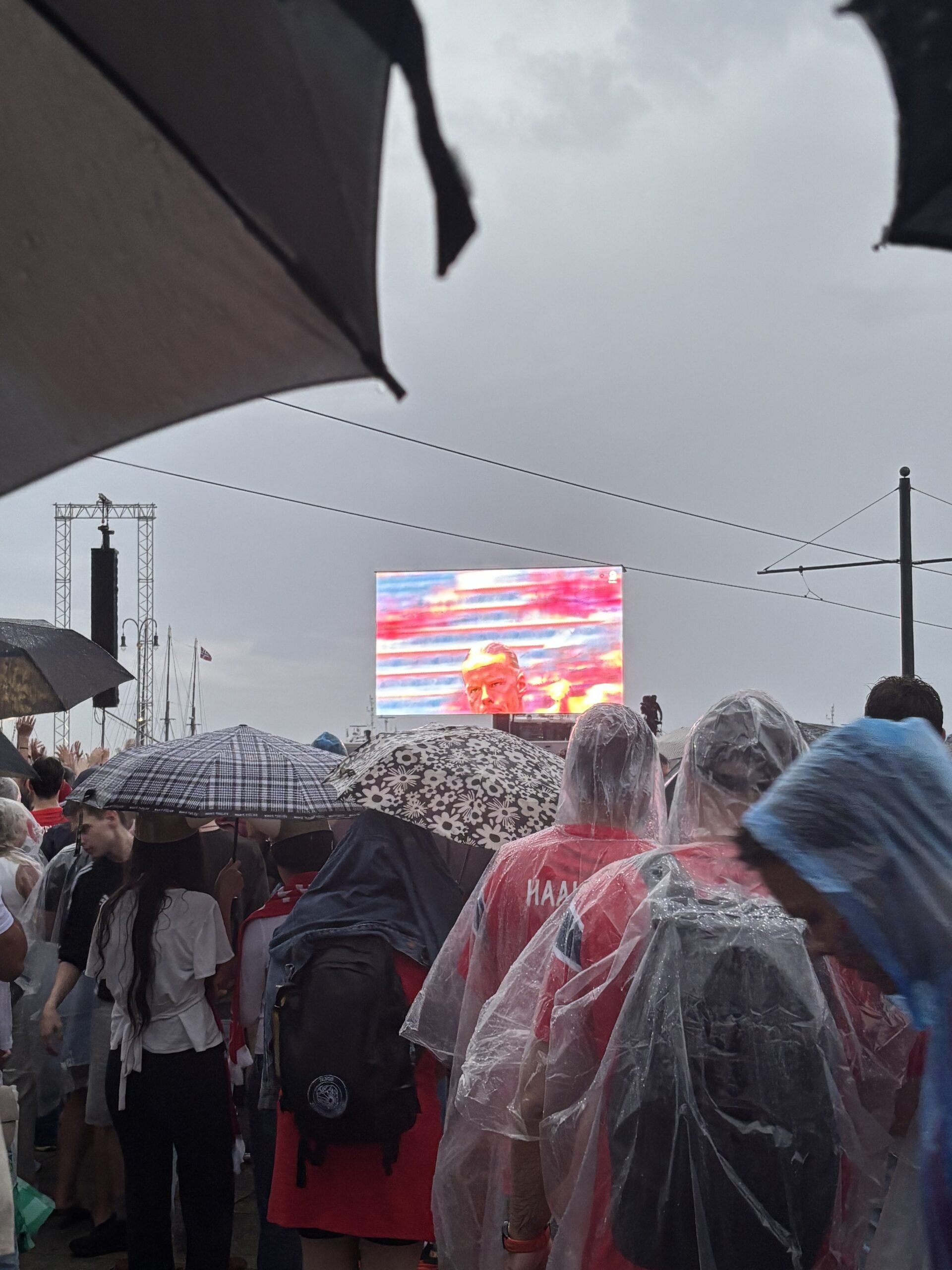
We left Helsingborg at 9 in the morning. The sky was doing that generous Scandinavian summer thing — wide open and sunny, without a hint of what was coming. But the forecast for Oslo that night said rain, so plans adjusted the way good travel plans always do: quickly, and without complaint. We grabbed a few umbrellas on the way out the door, half-joking that we were packing for two different countries in one bag.
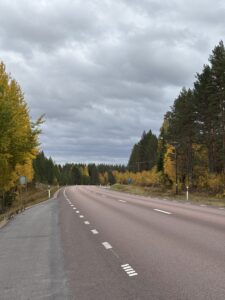
The drive itself is what I didn’t expect to fall for. Years ago, I remember watching movies on europe and being struck by how the film framed the beauty of European summer — that long, golden light that doesn’t seem to want to end, fields that look painted rather than grown. I didn’t think I’d get to stand inside that image myself, but somewhere between Helsingborg and the Norwegian border, I did. The road eased out of Sweden’s flat, sun-bleached farmland into rolling hills, the land slowly folding itself into deeper greens and grey rock as we crossed north. Lakes kept appearing out of nowhere, flat as glass, throwing back the light so hard you had to squint. Wooden red houses sat alone on hillsides like they’d been placed there for exactly this view. Somewhere past the border the road started climbing properly, curling around cliffs with pine forests pressing in close on both sides, and every half hour or so the landscape would reset itself into something even better than what came before. We rolled the windows down more than we needed to, just to let the air in. It’s the kind of drive that quietly rearranges your definition of beautiful, and by the time the hills started giving way to the outskirts of Oslo, I understood exactly why people fall in love with a road rather than just a destination.
Oslo, Before the Match
We reached around 4 pm, checked into our room, and didn’t waste much time before heading straight into the city. Oslo wasn’t just hosting a match that evening — it had rebuilt itself around one. Norwegian flags hung from balconies and shopfronts, red and white and blue everywhere you looked, sometimes wrapped around complete strangers as capes. Every bar had chalked up the kickoff time outside its door like an invitation rather than an announcement. Restaurants had wheeled their television screens outdoors, and public squares had been turned into open-air viewing zones with rows of chairs nobody was sitting in yet because everyone was still standing, singing, drumming on tables.
The closer it got to kickoff, the more the whole city seemed to breathe in unison. Vendors were selling scarves and face paint out of little carts. Kids sat on their fathers’ shoulders in jerseys two sizes too big. Groups broke into chants that would rise, fade, and then get picked up again by a completely different group two streets away, like the whole city was passing the same song hand to hand. Whoever we spoke to — a bartender, someone waiting in line, a stranger who bumped into us apologizing in three languages — the conversation found its way to the match within a sentence or two. Pubs were packed past their doors, people spilling out onto the pavement with pints in hand, and public screening areas had filled up so early that latecomers were happily watching from the gaps between other people’s shoulders. And through all of it, there was this open, easy warmth — nobody treated us like outsiders. People pulled us into their circles, handed us scarves, taught us chants on the spot, genuinely delighted that we’d driven this far just to be part of it. We even fell in with a small group who wanted to make a proper night of it regardless of the score, determined to celebrate the occasion itself rather than just the result.
When the Result Didn’t Go Norway’s Way
The match didn’t end the way the city had hoped. England were fortunate on the night, and when the final whistle went, the noise didn’t stop — it just changed shape. Instead of the eruption we’d seen on television days earlier, there was a slower, warmer sound: applause. People clapped for their own team as they walked off the pitch, heads up. Strangers turned to each other with a shrug and a smile instead of the sting I half-expected. Someone near us raised his glass and said, simply, “that’s football,” and the group around him laughed and drank to it like it was a toast rather than a consolation.
What struck me most was how quickly disappointment turned into something closer to pride. Chants that had been building all evening didn’t die — they just became about effort instead of outcome. People stayed in the pubs, stayed in the squares, kept singing, because the night had never really been only about winning. It was about showing up for each other, and that part of the evening hadn’t lost anything. Losing with that much grace, that much warmth still intact, taught me something I hadn’t expected to learn on a football trip: that the way people carry a loss says more about them than the way they carry a win.
The One I Owe the Most Thanks To
And through all of this, I want to thank the one I’ve truly bonded with on this trip — my boy, the Volvo. He made sure the whole journey stayed smooth, mile after mile, without a single complaint. Since he’s Swedish by build and I am Indian. I wasn’t sure what he’d make of my playlist. So on day one, I put on an ABBA song first, easing him in gently, and then followed it up with a set of Indian favorites. Turns out he loved every bit of it — not a single rattle of protest. After that we took a few smaller trips together just for the fun of it, and on the days I wanted to take the long way round instead of the fast one, he never once argued. He’s already told me he’s ready for a proper Euro trip together — but this Oslo run was the one we needed first, a kind of trial by highway.
We watched the match, we made it back safe, and now I’m back at my desk while he rests quietly in the garage, earning his break. But thank you, buddy — for the smooth roads, the shared playlist, and for quietly boosting my confidence the whole way there and back. Love you 😍